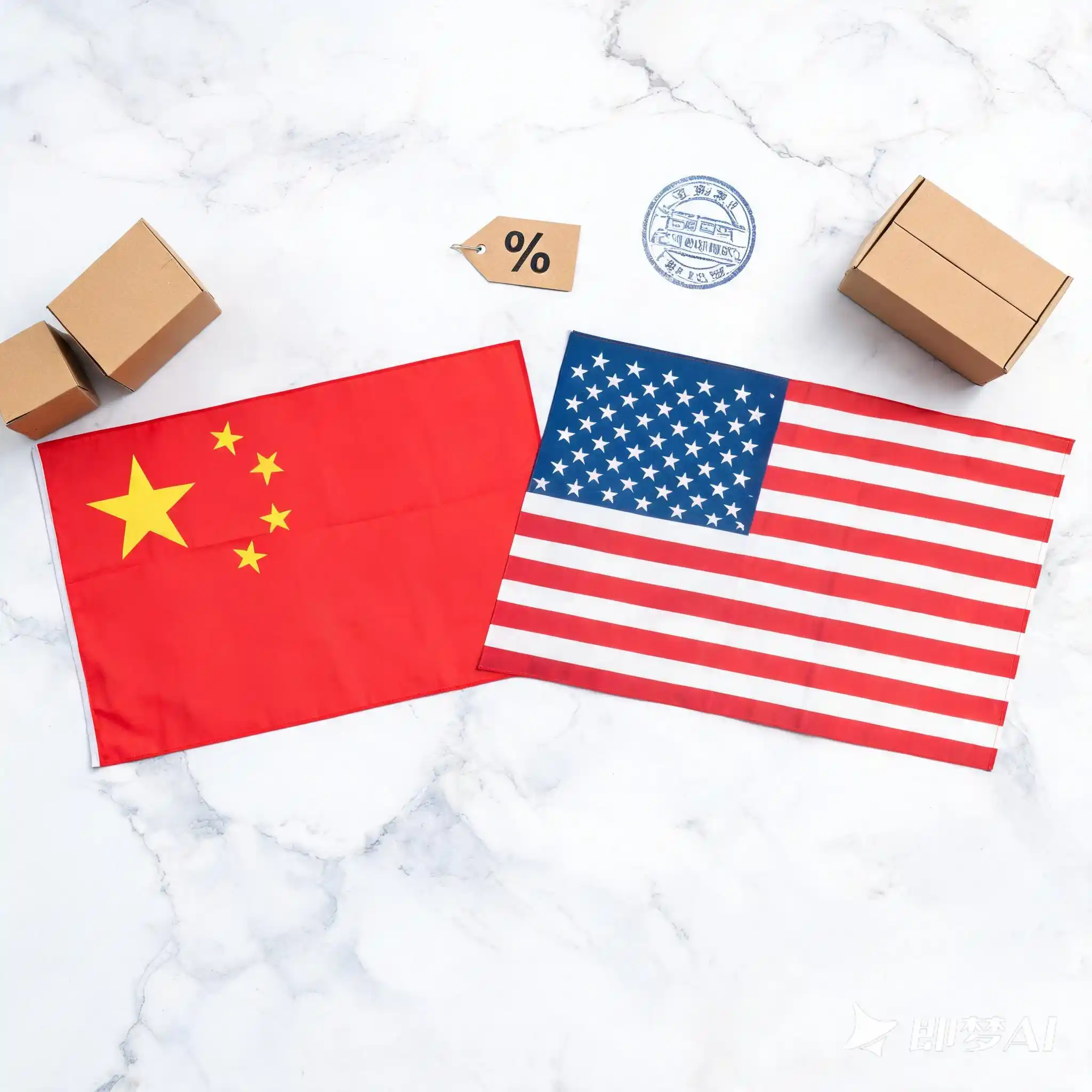
Trade policy between the US and China has shifted significantly over the past several months. This article sets out the key developments factually, based on official government statements and verified reporting, without speculation about outcomes.
Background: Why the Tariff Landscape Changed in February 2026
To understand the current situation, it is necessary to start with a court ruling.
On February 20, 2026, the US Supreme Court ruled, in a six-to-three decision, that President Trump had exceeded his authority in imposing tariffs under the International Emergency Economic Powers Act (IEEPA). This ruling invalidated the "fentanyl tariffs" and "reciprocal tariffs" that had been imposed on Chinese goods under IEEPA authority.
Following the ruling, the Trump administration implemented a temporary 10% import surcharge on all trading partners under Section 122 of the Trade Act of 1974. This Section 122 surcharge is scheduled to expire on July 24, 2026.
Separately, the existing Section 301 tariffs — imposed on Chinese goods between 2018 and 2019 in response to findings of intellectual property theft — were not affected by the Supreme Court ruling. These remain in force.
What USTR Launched in March 2026
Following the Supreme Court ruling, the Office of the US Trade Representative (USTR) initiated two new sets of Section 301 investigations using the legal authority unaffected by the court decision.
Investigation 1 — Industrial Overcapacity (March 12, 2026)
USTR launched Section 301 investigations into 16 economies, including China, the EU, Japan, South Korea, Vietnam, Thailand, Malaysia, Indonesia, and others, on the grounds of alleged structural excess capacity in manufacturing sectors including steel, semiconductors, and automobiles.
Investigation 2 — Forced Labor (March 13, 2026)
USTR launched Section 301 investigations into 60 economies — including China, the EU, India, Mexico, Vietnam, and others — on the grounds that these economies had failed to impose and effectively enforce a prohibition on the importation of goods produced with forced labor.
China's Response: Two Reciprocal Trade Barrier Investigations
China did not respond with immediate counter-tariffs. Instead, it launched a formal reciprocal investigation of its own.
On March 27, 2026 — one day after China's Commerce Minister Wang Wentao met with US Trade Representative Jamieson Greer at the 14th WTO Ministerial Conference in Cameroon — China's Ministry of Commerce (MOFCOM) announced two trade barrier investigations into US practices:
- Investigation 1: US practices and measures that harm global production and supply chains — launched in response to the US Section 301 overcapacity investigation
- Investigation 2: US practices and measures that hinder trade in green products — targeting policies including "Buy American" provisions and subsidy programs that China says restrict Chinese renewable energy exports and may breach WTO rules
MOFCOM stated that it would take corresponding measures based on the findings of these investigations to safeguard China's legitimate rights and interests.
📌 Note: These are formal investigation procedures, not tariff announcements. Under Chinese trade law, they are the required procedural step before any retaliatory trade measures can be formally imposed.
The June 2, 2026 USTR Finding: Proposed Tariffs on 60 Economies
On June 2, 2026, USTR released the findings from its March forced labor investigations and proposed new tariffs.
The key findings and proposals:
- All 60 investigated economies were found to have failed to impose or effectively enforce a prohibition on imports of goods produced with forced labor
- 54 economies were found to have neither imposed nor effectively enforced such a prohibition — proposed tariff rate: 12.5%
- 6 economies (Canada, Ecuador, the EU, Indonesia, Mexico, and Pakistan) have prohibitions but were found not to enforce them effectively — proposed tariff rate: 10%
- China is in the 12.5% group
- Vietnam, India, South Korea, Japan, and Australia are also in the 12.5% group
USTR also proposed a textile mechanism that would allow a certain volume of apparel and textile imports from certain economies to enter the US at a reduced Section 301 tariff rate. No details on the scope of this mechanism have been published yet.
These tariffs are proposed, not yet in effect. The comment period remains open until July 6, 2026. USTR will hold public hearings on July 7, 2026. A final decision will be issued after the hearings.
China's Response to the June 2 Proposal
On June 3, 2026, China's Foreign Ministry spokesperson Mao Ning stated at a regular press briefing that China consistently opposes all forms of unilateral tariff measures, that trade wars and tariff wars serve no party's interests, and that economic and trade issues should be resolved through dialogue and consultation on the basis of equality, respect, and mutual benefit. Mao Ning also stated that China does not have forced labor and opposes using this as a pretext for political manipulation.
On the same day, MOFCOM spokesperson He Yongqian stated that China's position on the Section 301 investigation has been consistent, and urged the US to meet China halfway and maintain steady bilateral economic and trade relations.
As of the date of publication, China has not announced any new retaliatory tariffs in response to the June 2 proposal.
Current Effective Tariff Rates on Chinese Bags Entering the US
The following reflects rates currently in effect as of June 4, 2026, based on official sources. Rates are applied additively:
| Tariff Component | Rate | Status |
|---|---|---|
| MFN base tariff (HS 4202 bags) | 16%–17.6% | ✅ In effect |
| Section 301 (IP theft, List 3/4A) | 25% | ✅ In effect |
| Section 122 import surcharge | 10% | ✅ In effect — expires July 24, 2026 |
| Proposed: Section 301 forced labor | 12.5% | ⏳ Proposed — not yet in effect |
| Current composite (approx.) | ~51–52% | Based on currently effective rates |
Key Dates Ahead
| Date | What Happens |
|---|---|
| June 22, 2026 | Deadline to request to appear at July 7 USTR hearing and submit testimony summaries |
| July 6, 2026 | Deadline for written public comments on proposed forced labor tariffs |
| July 7, 2026 | USTR public hearing on proposed Section 301 forced labor tariffs |
| July 24, 2026 | Section 122 import surcharge (10%) scheduled to expire |
| November 10, 2026 | One-year tariff suspension from November 2025 US-China agreement expires |
References & Sources
- USTR Official Press Release — USTR Makes Findings and Proposes Action in 60 Section 301 Investigations (June 2, 2026): ustr.gov
- China MOFCOM — Two Reciprocal Trade Barrier Investigations Announced (March 27, 2026): Global Times
- China MOFCOM Spokesperson He Yongqian — Statement on Section 301 Forced Labor Tariff Proposal (June 2026): Global Times
- China Briefing — US-China Tariff Rates: What Are They Now? (Updated June 3, 2026): china-briefing.com
- CNBC — U.S. Proposes Fresh Tariffs on 60 Economies Over Forced Labor Trade Practices (June 3, 2026): cnbc.com
- Buchanan Ingersoll & Rooney — USTR Recommends New Tariffs Following Forced Labor Investigations (June 3, 2026): bipc.com
- Husch Blackwell — USTR Proposes 301 Tariffs on 60 Countries Following Forced Labor Findings (June 3, 2026): internationaltradeinsights.com
- GeopolitEchs — China Launches Two Trade Barrier Investigations After US 301 Actions (March 27, 2026): geopolitechs.org
- Dimerco — US Tariff Update 2026 (Updated June 2026): dimerco.com
- Gateway Lines — Complete Guide to Section 301 China Tariffs in 2026: gatewaylines.com
Sourcing Bags from China?
Get a Transparent Quote Based on Current Costs
We track material and tariff developments in real time. Whether you're a US or European buyer, we can give you an accurate landed cost breakdown for your next order.
Get a Free Quote →