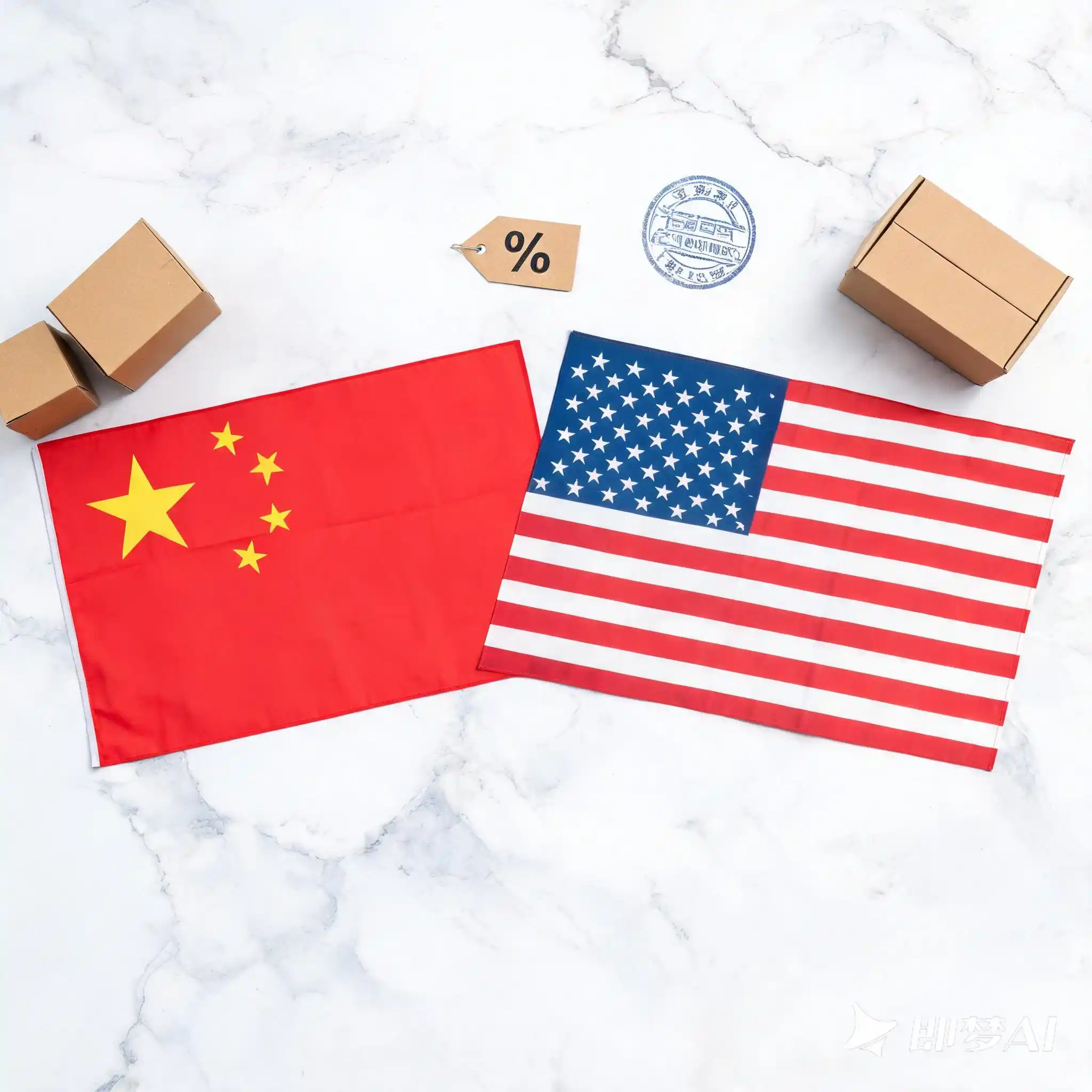
On May 14–15, 2026, President Trump and President Xi Jinping held a summit in Beijing — Trump's first visit to China in nearly a decade, and the most closely watched bilateral meeting since the trade war escalated sharply in early 2025. Markets expected a concrete tariff reduction agreement to follow. Two weeks later, the reality is more complicated than that.
This article looks at what the summit actually produced, what's happening with the legal landscape around US tariffs, and what the current situation means practically for brands and buyers sourcing bags from China.
What the Summit Actually Produced
The two sides issued separate readouts after the summit — and they don't entirely agree.
The US side: Trump described the visit as producing "fantastic trade deals," while simultaneously telling reporters that "tariffs were not discussed." The White House focused on tangible deliverables: China purchasing 200 Boeing aircraft, committing to at least $17 billion in annual US agricultural purchases, and establishing a bilateral Trade and Investment Council.
The Chinese side: China's Ministry of Commerce stated on May 16 that the two sides had "made arrangements on bilateral tariffs" and agreed in principle to negotiate a framework for reciprocal tariff reductions on goods worth $30 billion or more each, under the planned Trade Council.
Then on May 28, MOFCOM spokesperson He Yadong said at a regular press briefing:
"I want to reiterate — we hope the US side will honor its commitments and create positive conditions for expanding bilateral economic and trade cooperation."
In diplomatic language, "we hope the US side will honor its commitments" signals that the commitments are not yet being honored. The summit produced a framework — not an executable tariff reduction timeline. Specific product lists, reduction percentages, and implementation schedules are still being negotiated.
A Complicating Factor: The US Court Ruling
On the same day as China's May 28 statement, the US Court of International Trade ruled that the tariffs Trump imposed under the International Emergency Economic Powers Act (IEEPA) — including global reciprocal tariffs and "fentanyl" tariffs — are unlawful, and ordered them to be permanently stopped.
This adds a deeper layer of uncertainty. The US administration is preparing to maintain tariffs under alternative legal mechanisms — including Section 301 and Section 232 investigations. Even if the IEEPA-based tariff authority is struck down, replacement mechanisms may quickly fill the gap.
💡 What this means in practice: The existence and level of US tariffs on Chinese goods is now being determined as much by US domestic legal proceedings as by US-China negotiations. For exporters and buyers, this is an additional uncertainty layer that sits entirely outside anyone's control.
Current Tariff Rates on Chinese Bags Entering the US
Despite the summit, no new tariff adjustments took effect on June 1. The effective composite rate on Chinese bags (HS 4202) entering the US currently looks like this:
| Tariff Component | Rate |
|---|---|
| MFN base tariff (bags & travel goods) | 16%–17.6% |
| Section 301 (Trade War legacy tariff) | 7.5%–25% (varies by material) |
| Section 122 import surcharge | 10% |
| Composite effective rate (approx.) | 34%–52% |
For context: the effective rate on comparable products from Vietnam or Bangladesh is approximately 10%. That 24–40 percentage point gap is the single most consequential number in bag sourcing right now.
What This Is Actually Doing to the Industry
US buyer demand under sustained pressure
China's apparel exports to the US fell 57.65% year-on-year in January–February 2026 — from $2.77 billion to $1.17 billion — the sharpest recorded decline in a two-month window. Bags are classified differently, but face comparable pressure. Some US brands have begun shifting orders to Vietnam, Bangladesh, and Mexico, though full supply chain realignment takes 12–18 months. China remains the dominant sourcing origin for most bag categories in the short term.
De minimis is effectively over
The $800 duty-free threshold for small shipments from China has been significantly restructured. The DTC direct-ship model — where Chinese goods were sent directly to US consumers below the exemption threshold — no longer works economically. Every shipment now carries tariff exposure, which changes the unit economics for Amazon sellers and DTC brands entirely.
Quote validity periods have shortened dramatically
The combination of rising raw material costs and tariff uncertainty has pushed suppliers to shorten their quote validity from the previous standard of 30 days to 7–10 days in many cases. Buyers who delay decisions are finding that the price they were quoted is no longer available.
European buyers are in a relatively stronger position
This tariff situation has no direct impact on European buyers sourcing from China. EU import duties on Chinese bags remain unchanged. With some Chinese factories experiencing reduced US order volumes, European buyers currently have more leverage than usual — shorter lead times, greater factory flexibility, and more negotiating room on price.
Key Dates to Watch
| Date | What Could Happen |
|---|---|
| July 24, 2026 | Section 122 tariff's 150-day clock expires — tariff structure may shift again |
| November 10, 2026 | One-year tariff pause from November 2025 agreement expires — tariffs could rebound if no new deal is reached |
| Trade Council talks | Whether consumer goods including bags enter the $30B reciprocal reduction framework is the key variable to watch in H2 2026 |
What Smart Buyers Are Doing Right Now
The practical takeaway isn't to wait for policy to change. It's to make decisions based on the current cost structure.
If you're a US buyer: Factor tariff costs into your landed cost and pricing model from day one. Don't build a business case that depends on tariff reduction — treat current rates as the baseline and reforecast if and when that changes.
If you're a European buyer: The current window is favorable. Chinese factories have capacity, lead times are competitive, and there is more room to negotiate than in previous years. Lock in pricing sooner rather than later — raw material volatility means supplier quote validity has shortened significantly.
For all buyers: Don't sit on quotes. The 30-day validity that was standard a year ago is now 7–10 days in many cases. Decisions that get delayed often get repriced.
References & Sources
- China MOFCOM press briefing, May 28, 2026 — He Yadong on US-China tariff negotiation progress: stcn.com
- China MOFCOM — Readout on US-China trade consultation outcomes, May 20, 2026: sina.com
- Sputnik News CN — MOFCOM response on US-China tariff talks, May 29, 2026: sputniknews.cn
- CNN Politics — Trump-Xi Beijing Summit live coverage, May 14–15, 2026: CNN
- China Briefing — US-China Relations in the Trump 2.0 Era: A Timeline, May 2026: china-briefing.com
- NewWay Apparel — China Apparel Tariffs in 2026: 40+ Data Points, May 2026: newway-apparel.com
- FASH455 / Dr. Sheng Lu, University of Delaware — Tariffs Impact U.S. Apparel Sourcing, updated March 2026: shenglufashion.com
- China News Service — MOFCOM on US-China trade consultation progress, May 2026: chinanews.com.cn
From the Floor

Large US buyers have been shifting volumes to tariff-friendly countries — that's real. But for brands that need product variety, fast design iteration, or mid-season changes, Chinese suppliers still hold a clear advantage. A factory elsewhere can handle volume. It can't always handle complexity at the same time.
Suppliers producing mid-to-upper quality goods started redirecting their client development toward non-US markets well before the current tariff situation. The instability works both ways — it creates uncertainty for buyers and suppliers alike.
Raw material volatility is compounding this. When costs can shift significantly week to week, quote validity shortens or a buffer gets built into the price. Either way, it lands on the buyer.
Questions About Sourcing in the Current Environment?
Let's Talk Through Your Options
Whether you're a US buyer navigating tariff costs or a European buyer looking to move quickly on a favorable window — we can provide a transparent quote and help you plan around the current landscape.
Get a Free Quote →