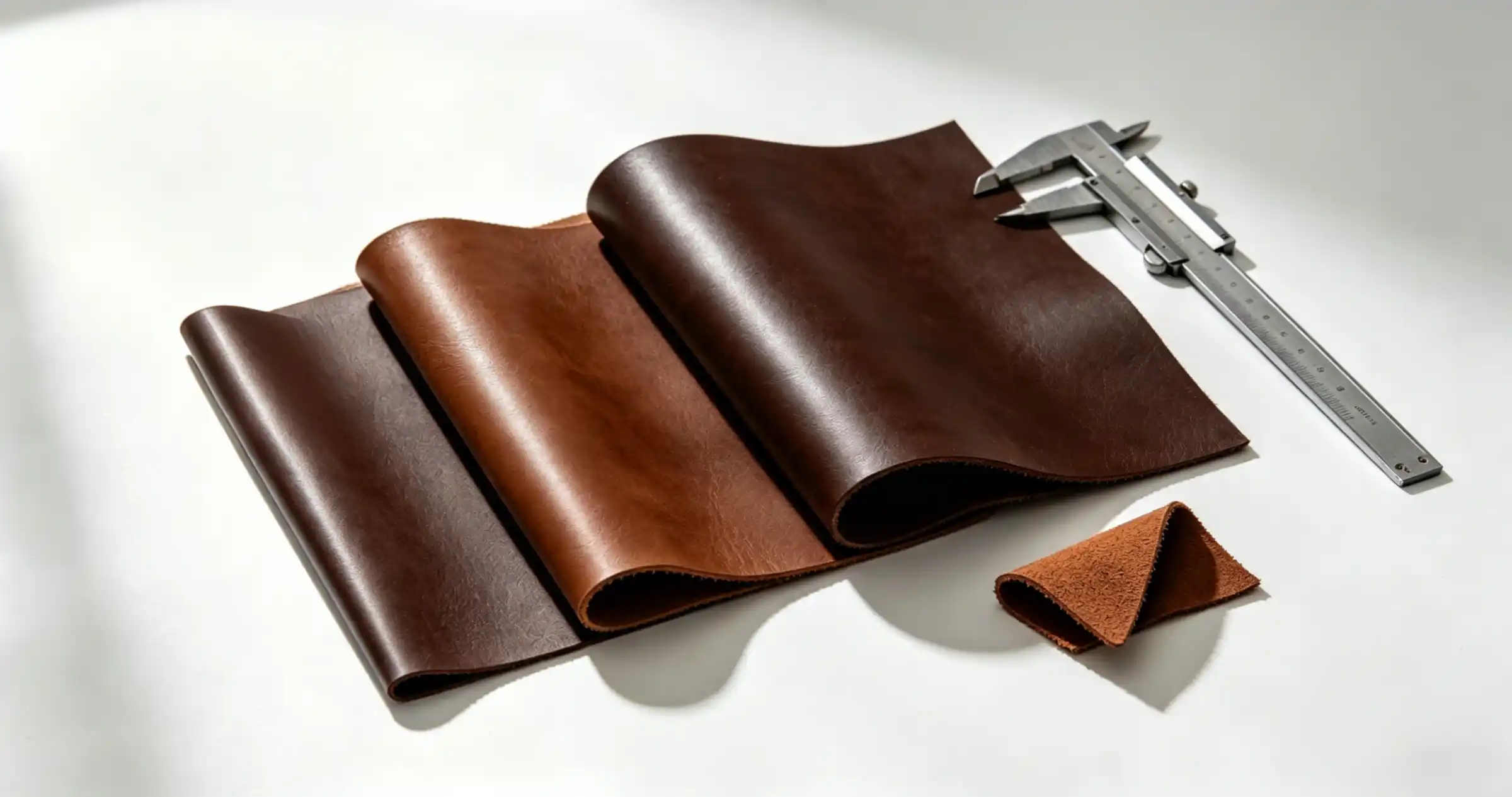
Walk into any bag factory in China and you'll find shelves of PU leather rolls that look almost identical at first glance — similar colors, similar textures, similar finishes. The price tags tell a very different story. One grade might cost three times as much as the one sitting next to it on the shelf.
For buyers sourcing bags, that price gap matters enormously. The difference between a low-grade and high-grade PU leather isn't just about cost — it's about how the bag performs over time, how it looks after six months of use, and whether your customer comes back to buy again or posts a complaint online.
This article explains how PU leather quality is determined, how the grades differ in practice, and — most importantly — how to evaluate quality before you commit to a material for production.
First: What Is PU Leather Actually Made Of?
PU leather is a composite material — a textile substrate (usually polyester or nylon fabric) coated with one or more layers of polyurethane resin. The quality of a PU leather product depends on three things: the quality of the base fabric, the formulation and thickness of the PU coating, and the finishing process applied on top.
Understanding this structure helps explain why grades differ so much — and where the cost differences actually come from.
| Component | Low Grade | High Grade |
|---|---|---|
| Base fabric | Thin, loosely woven polyester | Dense, tightly woven polyester or nylon |
| PU coating thickness | Thin single layer, minimal resin content | Multiple layers, higher resin density |
| PU formulation | Standard solvent-based, lower flexibility | Water-based or high-solid PU, greater flexibility and durability |
| Surface treatment | Basic emboss or print, minimal topcoat | Multiple finishing layers, UV treatment, scratch resistance |
| Thickness (overall) | 0.5–0.7mm | 0.9–1.4mm |
The Four Practical Grade Levels
The industry doesn't have a single standardized grading system for PU leather — but in practice, most materials fall into one of four levels:
Entry-level (Economy Grade)
Thin coating, minimal base fabric density, basic finishing. Looks acceptable new but shows wear quickly — surface cracking, peeling at stress points, and color fading within 6–12 months of regular use. Used in very low-price promotional bags, gift bags, and single-use products where longevity isn't expected.
Standard Grade
The most widely used grade in commercial bag production. Adequate coating thickness, decent base fabric, standard finishing. Holds up reasonably well under normal use for 1–2 years. The majority of mid-market fashion bags at $30–$80 retail are made with standard-grade PU. Performance is acceptable; it won't impress, but it won't embarrass you either.
Premium Grade
Thicker coating, denser base fabric, more sophisticated finishing including UV protection and scratch resistance topcoat. Noticeably better hand feel — softer, with more body. Maintains appearance significantly longer than standard grade. Used in mid-to-upper market bags ($80–$300 retail) and private label products with quality expectations.
High-Grade / Microfiber PU
The top of the PU leather spectrum. Microfiber-reinforced base fabric (similar to the structure of genuine suede), combined with high-performance PU coating. Closest to genuine leather in feel, flexibility, and breathability. Significantly higher cost, but genuinely approaches leather quality in performance metrics. Used in accessible luxury products and brands that want leather-like quality without the genuine leather price or ethical concerns.
💡 Note on microfiber PU: Microfiber PU is sometimes marketed as "microfiber leather" or "ultra microfiber" — it's still a synthetic material, not genuine leather. But it performs materially better than standard PU and is worth understanding as a separate category if you're targeting premium positioning with a vegan material.
How to Tell Grades Apart: What to Check
When evaluating PU leather — either at a supplier's showroom or from a swatch you've received — work through these checks:
1. Thickness
Use a caliper or simply press the material between two fingers. Higher-grade PU has more body and thickness. Thin, flimsy material that collapses easily between your fingers is a reliable signal of low grade. A quality PU leather for bag production should feel substantial — at least 0.9–1.0mm for most applications.
2. Bend test
Fold the swatch sharply and release it. Low-grade PU will show a crease mark or small surface crack where it was folded. Higher-grade PU springs back cleanly with little or no visible marking. This simulates what happens at the bag's fold points — handles, flap edges, corner seams — after months of use.
3. Scratch test
Run a fingernail firmly across the surface. Low-grade PU scratches visibly and easily. Higher-grade PU with a proper topcoat resists light scratching. Note: this is a relative test — even high-grade PU will scratch under sharp pressure. You're looking for surface resilience, not invulnerability.
4. Back fabric examination
Turn the swatch over and look at the base fabric. A dense, tightly woven backing is a positive sign. A thin, loosely woven or even slightly translucent backing indicates a low-density base — which directly correlates with lower durability.
5. Edge inspection
Cut a small piece and examine the cross-section edge. You can see the PU coating layer(s) and the base fabric. Thicker coating = more material investment = better durability. If the coating layer looks almost invisible, the material is on the low end.
6. Smell test
Lower-grade PU leathers often have a stronger chemical odor from the solvents used in the coating process. Water-based PU formulations — typically used in higher grades — have a much milder odor. A strong chemical smell on a new material is worth noting.
7. Abrasion test (if time allows)
Rub a coin or key across the surface repeatedly. This simulates wear at contact points — the bottom of the bag, strap attachment areas, zipper surrounds. Low-grade PU shows surface degradation quickly; premium grades maintain their appearance significantly longer.
At Camcue, when a client specifies PU leather, we source fabric options based on their budget or material requirements — so they can make a hands-on comparison before committing. The same bag design can be produced at very different cost and quality levels — and the right choice depends on the client's retail price, target market, and brand positioning.
Where Grades Fail First: The Stress Points to Watch
Even the best PU leather will eventually show wear — but lower grades fail faster, and they fail in specific places first. Knowing where to look helps you evaluate both material samples and finished samples more effectively.
- Handle attachment points — highest stress concentration; low-grade PU cracks and peels here first
- Fold lines at flap edges — repeated opening and closing creates flexion stress; coating separates on lower grades
- Corner seams — where the material is pulled tightest during assembly; thin coatings crack at the seam allowance
- Zipper surrounds — constant friction and flexion; surface finish degrades quickly on low grades
- Bottom panel — abrasion from surfaces; low-grade base fabrics show through as coating wears
Grade vs. Application: Matching Material to Product
| Application | Recommended Grade | Reason |
|---|---|---|
| Promotional / gift bags | Entry-level | Short expected use life; cost is the primary driver |
| Fashion crossbody / tote, $30–$80 retail | Standard | Balances cost and acceptable durability for price point |
| Mid-market handbag, $80–$250 retail | Premium | Customer expectation of quality; repeat purchase depends on longevity |
| Accessible luxury, $250–$600 retail | Microfiber PU | Leather-like performance required; vegan positioning is a bonus |
| Corporate gifting | Standard to Premium | Depends on budget; premium grade reflects better on the gifting brand |
From the Floor

For material selection, we start by matching options to the client's budget — then layer in any specific technical requirements they have. Retail and brand clients, for example, often require materials to pass a defined set of performance tests beyond basic environmental compliance. These typically cover mechanical properties (tear strength, peel strength, Taber abrasion resistance, room-temperature flex endurance), colorfastness (dry and wet rub, water stain, perspiration, color migration), and environmental aging (UV yellowing resistance, hydrolysis resistance, heat aging). For structured hard-shell bag applications, low-temperature flex resistance is added — the material must not crack when folded at -10°C. Knowing these requirements upfront is what allows us to source the right material from the start, rather than discovering a compliance gap after sampling.
Not Sure Which PU Grade Is Right for Your Product?
We'll Send You Swatches to Compare
Tell us your retail price target and end use. Our Dongguan R&D team will source PU leather options at different quality levels and send physical swatches for your review — before any production commitment.
Request Material Swatches →