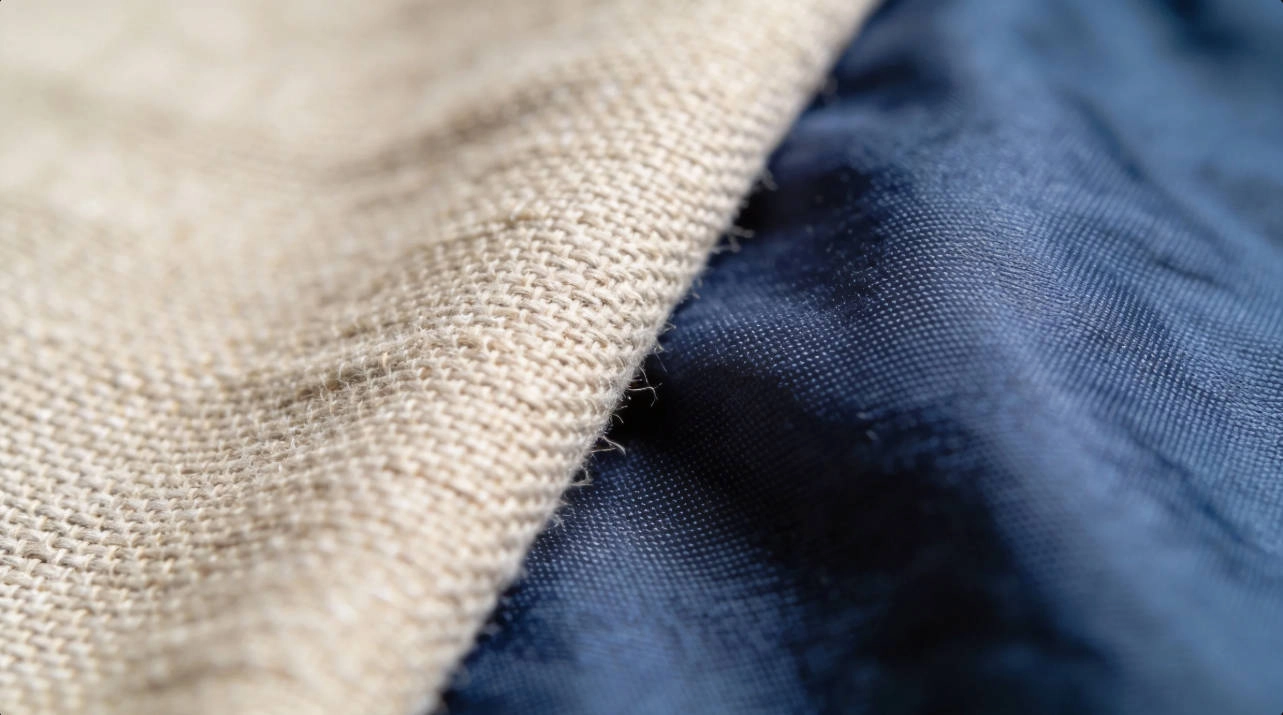
The fabric you choose for your bag determines almost everything else: how the bag looks, how it performs, how long it lasts, how much it costs to make, and who will want to buy it.
It's one of the earliest decisions in any custom bag project — and one of the most consequential. Choose the wrong material for your market and you end up with a product that looks good in photos but disappoints in person, or one that performs well but can't be priced where you need it.
This guide covers the most widely used bag fabrics in commercial production — PU leather, nylon, polyester, canvas, and Oxford fabric — with honest notes on where each one works, where it doesn't, and what to watch out for when sourcing.
Before You Choose: Three Questions to Answer First
Material selection isn't just about aesthetics. Before you look at any specific fabric, answer these three questions — they'll narrow your options faster than any spec sheet.
1. What does this bag need to do?
A bag that carries a laptop through daily commutes has different material requirements than a fashion crossbody worn to dinner. Function drives material — durability, water resistance, weight, structure, and abrasion resistance all matter differently depending on use case.
2. Who is buying it, and what do they expect?
A sustainable lifestyle brand's customer expects different materials than a streetwear brand's. A corporate gift program has different requirements than a premium DTC fashion line. Your material choice signals positioning before the customer even touches the product.
3. What is your target unit cost?
Material is the largest single component of bag cost. Knowing your unit cost ceiling before you start material selection prevents you from falling in love with a fabric you can't afford to use.
💡 Tip: At Camcue, when a client comes to us with a bag concept, these three questions are the first thing we work through together. The answers shape every material recommendation we make — and often change the client's initial instinct about what fabric to use.
PU Leather (Faux Leather / Vegan Leather)
PU leather — polyurethane-coated fabric — is the most widely used material in fashion bag production today. It's versatile, cost-effective, and available in a wider range of textures, finishes, and colors than almost any other bag material.
What it looks like
PU leather can be finished to mimic smooth leather, croc emboss, python emboss, suede, matte, metallic, and dozens of other surfaces. The visual range is enormous — and at a good quality level, it reads as premium to most consumers.
Performance characteristics
PU leather is easy to clean, moderately water-resistant, and holds its shape well when paired with appropriate interlining. Lower-grade PU can peel or crack over time — typically at stress points like handles, corners, and zipper surrounds. Quality varies significantly between suppliers, so material sourcing matters enormously.
Where it works best
- Fashion handbags, crossbody bags, clutches, mini bags
- Cosmetic and organizer pouches
- Gift-with-purchase and promotional bags
- Brands positioning in the mid-market to accessible premium range
- Vegan and cruelty-free product lines
Where it doesn't work as well
- Heavy-duty functional bags (tool bags, tactical bags, heavy outdoor use)
- Ultra-premium positioning where consumers specifically expect genuine leather
Cost range
Low to mid. One of the most cost-efficient materials for fashion bag production, especially at small to medium quantities.
PU leather quality is one of the areas where material sourcing makes the biggest difference. Two bags that look identical can have very different longevity depending on the grade of PU used. At Camcue, we provide material swatches at different quality and price points so clients can make an informed choice before committing to a production run.
Nylon
Nylon is the go-to material for bags that need to perform — lightweight, strong, water-resistant, and abrasion-resistant. It's been the dominant material in backpacks, travel bags, and functional carry goods for decades, and remains one of the most technically capable fabrics available for bag production.
Understanding nylon weight (denier)
Nylon is rated in denier (D) — a measure of fiber thickness and density. Higher denier = heavier, more durable fabric.
| Denier | Weight & Feel | Typical Use |
|---|---|---|
| 210D | Lightweight, soft | Linings, lightweight fashion bags, pouches |
| 420D | Medium weight, versatile | Everyday crossbody bags, daypacks, travel accessories |
| 840D | Heavy, structured | Laptop bags, commuter backpacks, durable travel bags |
| 1680D | Very heavy, maximum durability | Tool bags, tactical bags, heavy-duty outdoor gear |
Where it works best
- Backpacks, laptop bags, commuter bags
- Travel bags and duffles
- Outdoor and sports bags
- Tool and utility bags
- Brands focused on function, durability, and everyday performance
Where it doesn't work as well
- Formal or luxury-adjacent fashion bags where a sleek, structured aesthetic is required
- Bags with very detailed embossing or surface texture (nylon doesn't emboss like PU)
Cost range
Low to mid. Nylon is generally cost-efficient, with price increasing at higher deniers. 1680D ballistic nylon is significantly more expensive than 210D.
Polyester
Polyester is often compared directly to nylon — and they do share many properties. Both are synthetic, lightweight, and water-resistant. But there are meaningful differences that affect which one is right for a given product.
| Nylon | Polyester | |
|---|---|---|
| Strength | Higher tensile strength | Good, slightly lower than nylon |
| Cost | Slightly higher | Lower — more economical |
| Color retention | Can fade slightly over time | Excellent — colors stay vibrant longer |
| UV resistance | Lower | Higher — better for outdoor use |
| Moisture absorption | Absorbs slightly more | Near zero absorption |
| Sustainability options | Recycled nylon available (rPET equivalent) | Recycled polyester (rPET) widely available, GRS-certifiable |
For most functional bag applications, polyester delivers comparable performance to nylon at a lower price point. Nylon holds an edge in applications requiring maximum tensile strength — heavy-duty straps, reinforced handles, tactical gear.
💡 Sustainability note: Recycled polyester (rPET) — made from post-consumer plastic bottles — is one of the most accessible sustainable material options in bag manufacturing. It's GRS-certifiable, widely available, and adds minimal cost over virgin polyester. If your brand makes sustainability claims, rPET is worth exploring.
Canvas
Canvas is a plain-woven fabric — traditionally cotton, sometimes cotton-polyester blend — with a distinctive texture and a long history in bag making. It sits in a different aesthetic category than synthetic materials: more artisanal, more relaxed, more heritage.
Standard canvas
Medium weight, breathable, and printable. Works well for tote bags, market bags, and casual daypacks. Takes screen printing and dye well, making it popular for brands with strong graphic identities. Not inherently water-resistant.
Waxed canvas
Canvas treated with a wax coating — water-resistant, slightly stiff when new, softens with use. Associated with outdoorsy, heritage, and workwear aesthetics. Develops patina over time. Popular with brands targeting men's lifestyle, adventure, and premium casual positioning.
Where canvas works best
- Tote bags, market bags, everyday carry
- Brands with a casual, artisanal, or heritage aesthetic
- Promotional and retail packaging bags
- Waxed canvas: outdoor lifestyle, workwear-inspired, premium casual
Cost range
Low to mid for standard canvas. Waxed canvas is higher — the waxing process adds cost and lead time.
Oxford Fabric
Oxford fabric is a woven synthetic textile — typically polyester or nylon — with a distinctive basket-weave texture. It's one of the most practical and underappreciated materials in bag production: durable, water-resistant, easy to work with, and available at a wide range of price points.
You've almost certainly used a bag made from Oxford fabric — it's the default material for luggage, laptop bags, school bags, and organizer pouches the world over. The 600D Oxford polyester backpack is arguably the most-produced bag in the world.
Key characteristics
- Durable and abrasion-resistant
- Water-resistant (PU-coated versions are more so)
- Lightweight relative to its strength
- Easy to print on and dye
- Available in 300D, 420D, 600D, 900D — higher = heavier and more durable
Where it works best
- Laptop bags, backpacks, school bags
- Luggage and travel accessories
- Corporate gifting and promotional bags
- Organizer pouches and tech cases
- Any application where durability and value are more important than premium aesthetics
Cost range
Low. Oxford fabric is one of the most cost-effective materials available for bag production, making it the standard choice for high-volume and budget-sensitive applications.
Material Selection at a Glance
| Material | Best For | Cost | Key Strength |
|---|---|---|---|
| PU Leather | Fashion bags, crossbody, clutch, cosmetic | Low–Mid | Aesthetic range, vegan-friendly |
| Nylon | Backpacks, travel, tool bags, heavy duty | Low–Mid | Strength, durability, water resistance |
| Polyester | Everyday bags, linings, rPET sustainable | Low | Color retention, UV resistance, cost |
| Canvas | Totes, casual bags, heritage aesthetic | Low–Mid | Printability, artisanal feel |
| Oxford Fabric | Laptop bags, school bags, corporate gifts | Low | Durability, value, versatility |
One More Thing: Always Request Physical Swatches
No material guide — including this one — replaces the experience of touching the actual fabric. Colors look different on screen. Texture descriptions like "smooth" and "soft" mean different things to different suppliers. Weight and drape can only be evaluated in person.
Before confirming any material for production, request physical swatches. Compare them in natural light. Check how they respond to bending and stress. If you're considering multiple options at different price points, get samples of each and compare them side by side.
At Camcue, material swatch requests are a standard part of our development process. For any new project, we source samples at different quality levels and price points so clients can make a hands-on comparison before committing. China's material market moves quickly — what's available today at a given price point may be different in six months, and staying current with sourcing is part of what we bring to every project.
From the Floor

Price is a critical factor for most clients — which is why we maintain our own supplier management system that tracks and compares pricing across suppliers, along with each supplier's specific strengths and historical pricing data. This lets us prepare better recommendations for repeat orders too, not just the first one. Beyond pricing, a client's design vision genuinely helps our sample room make better material pairings — the more we understand what a client is trying to achieve, the more targeted our suggestions become. Suppliers should be actively communicating with clients, not just throwing out quotes. The current market environment has a real problem: too many factories and small companies have joined B2B platforms and issue prices before understanding the brief. Clients then use those numbers as leverage in negotiations — and the whole market ends up in a race to the bottom that serves nobody well.
Not Sure Which Material Is Right?
Let's Work Through It Together
Tell us about your bag concept — the end use, the market, the budget. Our Dongguan R&D team will recommend materials at different price points and send physical swatches for your review before any production commitment.
Get a Free Quote →